Entradas

First British Colonies
Imagen
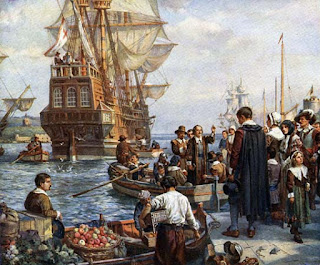
House of Burgesses Representative  assembly  in colonial  Virginia , which was the first elective governing body in a British overseas possession. The assembly was one division of the legislature established by Gov.  George Yeardley  at  Jamestown , July 30, 1619; the other included the governor himself and a council, all appointed by the colonial proprietor (the  Virginia Company ). Because each Virginia settlement was entitled to elect two delegates, the original membership of the House of Burgesses was 22. Pilgrim Fathers The Pilgrim Fathers were a religious, English group founded in late 16 th century that, unhappy with the political and religious atmosphere in its country, decided to travel to Netherlands and to America. They were met in puritan, clandestine church because religious prosecutions were carried out. They travelled on the Mayflower, the ship they used to arrive to the US. Due to some ship problems, they had to ...
The Stuarts

Imagen
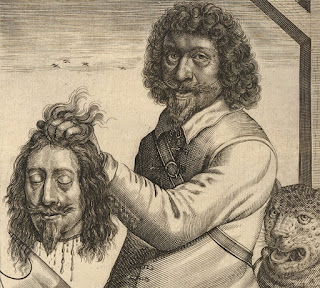
- Jame s I Charles I Relationship with Parliament In 1629 Charles I dismissed Parliament and forbade people to speak of calling another, this was the start of Personal Rule. In the body of this essay the events and disputes that led to this situation will be explored fully.  Charles himself was described as aloof and unyielding. He believed strongly in divine right, he saw any critcism as being potentially treacherous. His communication skills were also poor, his aloof style meant his speeches to parliament were rebukes and he would allow no counter arguments. These factors of his personality had damaging effects in his relationship with the country at large.  During 1625-29 the gap between the political nation and the Kings court began to widen. Charles only took advise from his court.  Buckingham effectively controlled the court right up to his assassination. He dismissed any agitators from court and controlled the flow of patronage.  ...

Victorian Britain and Industrial Revolution

Imagen
Causes of Industrial Revolution FROM 16 TH CENTURY, PROGRESSES IN TRADING, FINANCIAL METHODS AND IN SAILING WERE BEING DEVELOPED. RENAISSANCE MADE AN ENORMOUS DIFFERENCE BECAUSE IT PROMOTED THE CREATION OF THE VERY FIRST CAPITALIST SOCIETIES IN NETHERLAND AND ITALY.  HOWEVER, IN MIDDLE 18 TH CENTURY THE HUGEST DIFFERENCE WAS PRODUCED, AS THE HEAVY INDUSTRY AND MINEWORK STARTED DEVELOPING AND IMPROVING (THEY WERE PRETTY BACKWARD) APART FROM THAT, THE NAPOLEONIC WARS SETTLED DOWN THE EUROPEAN INDUSTRY. DUE TO THE WAR, THE IMPORTATIONS OF PRODUCTS AND RAW MATERIALS WERE CALLED OFF. IT CAUSED A HUGE NEED OF SOME GOODS, SO THE GOVERNMENTS WERE FORCED TO DEVELOP NEW INDUSTRIES TO SATISFY THE DEMANDS OF THE SOCIETY, ORIGINATING NEW INDUSTRIES THAT DIDN’T EXIST UNTIL THEN. Workers and children situation Workers at Victorian Britain didn't the same rights as workers of today have.  They were used to work almost 12 hours a day for a really low salary. The work...

Iron Age and Celts

Imagen
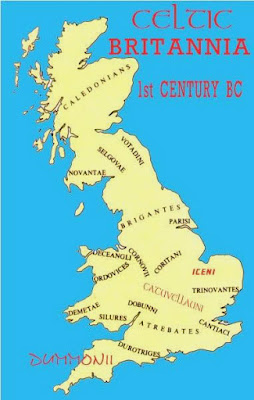
Geography In the Iron Age, the celts are situated in Iron Age Britain. These celt are the Insular Celts. All Celtic languages extant today belong to the Insular Celtic languages, derived from the Celtic languages spoken in Iron Age Britain and Ireland. They were separated into a Goidelic and a Brythonic branch from an early period. Linguists have been arguing for many years whether a Celtic language came to Britain and Ireland and then split or whether there were two separate "invasions". The older view of prehistorians was that the Celtic influence in the British Isles was the result of successive invasions from the European continent by diverse Celtic-speaking peoples over the course of several centuries, accounting for the P-Celtic vs. Q-Celtic isogloss. This view has been challenged by the hypothesis that the Celtic languages of the British Isles form a phylogenetic Insular Celtic dialect group. In the 19th and 20th centuries, scholars commonly dated the ...